Millcreek residents live squarely in the zone where dust from the shrinking Great Salt Lake is costing Utahns up to $2.3 billion a year in health damage, a new study found.
The working paper from the National Bureau of Economic Research (NBER), released Thursday, Sept. 10, found that dust effects reach up to 100 kilometers from the lake. That radius covers 86% of Utah's population, including all of the Salt Lake Valley.
The paper, titled "Dust in the Wind: The Health Costs of Great Salt Lake Desiccation," was authored by researchers at Texas A&M University, the University of California, Davis, and Arizona State University. It has not yet undergone peer review.
Researchers found that every additional 39 square miles of exposed lakebed increased fine particulate pollution (PM2.5) by about 0.8 to 0.9 micrograms per cubic meter near the lake. Downwind areas saw even larger increases. The health cost estimates are based on emergency room visits and lost years of life, Utah Business reported.
The study also compared the cost of acquiring water to the health savings. Buying water from agricultural users would cost an estimated $432 to $975 per acre-foot. But every acre-foot that reaches the lake would deliver $600 to $1,800 in health benefits from reduced dust alone.
"The purchase cost will probably be less than the value it's providing to Utahns," co-author Eric C. Edwards of UC Davis said. "… You don't have to save the whole lake to start protecting people's health. Even a little bit of water will provide benefits."
The Salt Lake Tribune reported that the $1.1 billion to $2.3 billion figure may be conservative. The study measured only dust particles, not the arsenic and other toxins naturally occurring in the exposed lakebed.
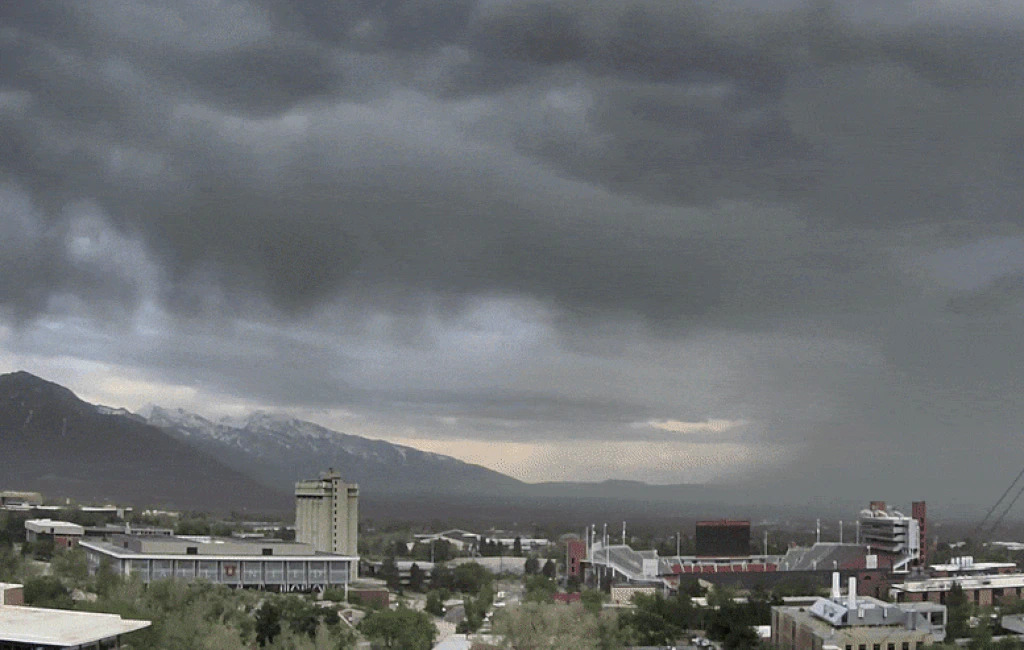
Residents saw the problem firsthand on Wednesday, July 8, when a Great Salt Lake dust storm swept across Salt Lake City and pushed coarse particulate pollution (PM10) to about four times the healthy limit, the Tribune reported.
As of July 2026, over 55% of the lakebed was exposed and water levels sat at just 33%, according to data cited by the Daily Utah Chronicle. University of Utah air quality researcher Kevin Perry told the Chronicle that at high concentrations, dust impacts everybody, with the strongest effects on the elderly and children.
Utah's Division of Air Quality director Bryce Bird said monitors have been detecting airborne dust from the lake one to ten times per year. The state planned to have eight new Great Salt Lake dust monitors installed by the end of July 2026, with more than 20 within five years.
Ben Abbott, head of the environmental group Grow the Flow, told the Tribune that multiple groups have estimated restoring the lake would cost $200 million to $500 million a year. He called that figure "a bargain" given the study's findings.
The Great Salt Lake Commissioner's Office and Utah's Department of Natural Resources said in a joint statement that increasing natural water inflows is the most cost-effective way to reduce dust from the exposed lakebed.
The NBER paper's authors described the study as a first step toward giving policymakers hard numbers on the health costs of the lake's decline. No specific legislative action tied to the paper has been announced.