.png)
The next Salt Lake County sheriff will shape jail policy, surveillance tools and immigration enforcement that touch Millcreek residents daily. Incumbent Rosie Rivera and challenger Shane Manwaring face off on the Nov. 3 ballot.
Millcreek's streets are patrolled by the Unified Police Department (UPD), not the Sheriff's Office directly. But the sheriff controls the county jail, sets rules for automatic license plate readers (ALPRs) and decides how the office cooperates with U.S. Immigration and Customs Enforcement (ICE). Those decisions ripple into UPD's work in Millcreek, where Precinct Chief Christine Petty-Brown oversees more than 40 officers and staff, according to the UPD Millcreek Precinct.
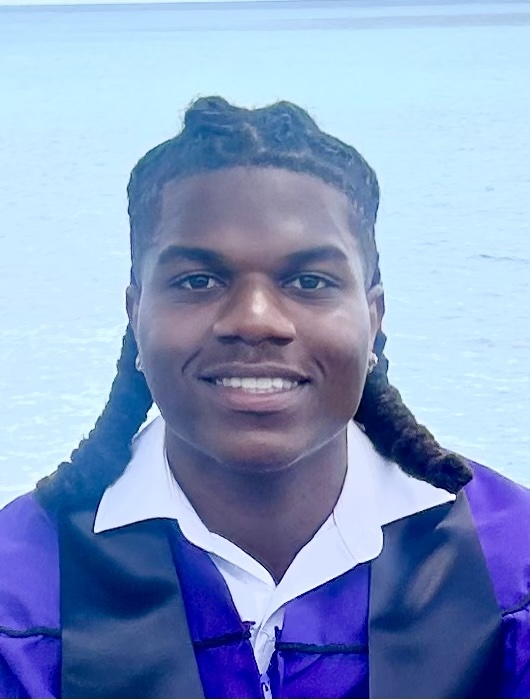
Rivera, a Democrat, has led the Sheriff's Office since 2017. She wrote in a Salt Lake Tribune voter guide questionnaire that she has 33 years in law enforcement and oversees 1,100 employees and volunteers across law enforcement, corrections and court security.
Manwaring, a Republican, is a UPD lieutenant and retired U.S. Army colonel. He wrote in the same questionnaire that he transformed a 759-member military unit after what he called "serious climate failures."
ICE detainees
Salt Lake County currently contracts with ICE for jail beds. The candidates split here.
Manwaring supports continuing to house ICE detainees. Rivera says the county should stop. Both oppose joining the federal 287(g) program, which would deputize local officers as immigration agents.
Manwaring wrote that he supports standard jail record-sharing so that non-citizens who commit crimes are held accountable. He added: "When vulnerable communities fear local police will deport them, victims of domestic violence and abuse stay in the shadows …"
Rivera wrote that she follows current Utah law requiring sheriffs to notify federal authorities before releasing ICE-flagged individuals, but supports changing state law to reduce mandatory local involvement with ICE.
License plate readers
Both candidates support continued ALPR use but differ on limits.
Manwaring wrote that he would restrict readers to critical investigations such as missing children and violent crime, and would block private companies from capturing public data.
Rivera called for strict guardrails including limits on data collection and retention, access restricted to trained users, limits on out-of-state use, mandatory logs and audits, and legal consequences for misuse.
Low-level offenders
Millcreek's UPD precinct already pairs a licensed clinical social worker with a mental health detective to respond to crisis calls. The next sheriff's approach to low-level offenders tied to homelessness, substance abuse or mental illness will shape what happens after those encounters.
Manwaring wrote that nonviolent offenders who pose no safety threat belong in diversion programs. He would use the county jail's secure medical facility for detox and stabilization before connecting people with treatment.
Rivera wrote that jail is not always the best response. She supports alternatives coordinated by justice partners, with victim input, clear conditions and connections to treatment and housing.
Jail overcrowding record
Rivera points to ending routine overcrowding releases as a key achievement. The Sheriff's Office stopped the practice on June 1, 2025, after the Salt Lake County Council funded the reopening of the Oxbow Jail's third pod, adding 184 beds.
A state audit found Salt Lake County's crime rate is 69% higher than the state average and that 38% of individuals released due to jail overcrowding in 2025 were re-arrested within 90 days. Rivera told a legislative committee on Sept. 17 that emergency releases remain a last resort. "And that is the very last option that we want to have," she told KUTV.
Mail ballots must reach a dropbox or the county clerk by 8 p.m. on Nov. 3.