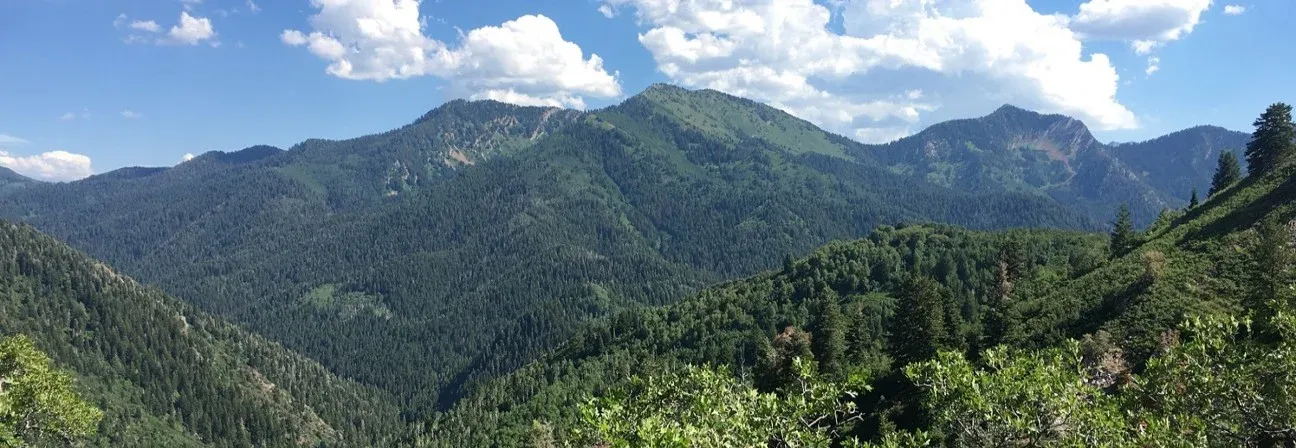
Utah wildfires have burned more acres in 2026 than the previous five years combined, and the threat is close to home. Millcreek banned personal fireworks around Friday, July 24, after five fires broke out in the area since July 4, most of them human-caused, according to ABC4. U.S. Forest Service lands statewide, which include Millcreek Canyon, are under Stage 1 or Stage 2 fire restrictions.
As of July 6, flames had consumed 357,173 acres statewide, surpassing the 355,944-acre total from 2021 through 2025, according to KUER. The Cottonwood Fire near Beaver, which began Monday, June 22, exploded by 20,000 acres overnight and has destroyed approximately 150 structures, making it the most destructive wildfire by structures lost in state history.
Kelly Wickens, a fire prevention specialist with the Utah Division of Forestry, Fire and State Lands, told KUER in early July that the state is seeing "fire growth up to 30,000 acres in a day, which we haven't seen in a very long time, if ever."
Why this year is different
April 2026 brought Utah its lowest snowpack on record since measurements began in the 1930s, according to the Daily Utah Chronicle. Jamie Barnes, director of the Utah Division of Forestry, Fire and State Lands, said in early July that the below-average snowpack melted off earlier, leaving fuels like sage at historic-low moisture content.
A peer-reviewed study published July 22 in the Proceedings of the National Academy of Sciences found that global warming has made extreme snow droughts 14 times more likely in the Upper Colorado River Basin compared to pre-industrial conditions.
Dominik Kulakowski, a professor of geography at Clark University who studies climate and mountain ecosystems, told the Salt Lake Tribune that weather and climate now override fuel conditions in determining wildfire behavior. Bradley Washa, a firefighter and professor of wildland resources at Utah State University, said traditional fuel treatments and defensible-space strategies were built for average fires, not the extreme events Utah is experiencing.
What it means for Millcreek Canyon visitors
The Bonneville Fire, which burned near the University of Utah foothills in June, was human-caused. The Wasatch foothills bordering East Millcreek and Canyon Rim neighborhoods face similar ignition risks.
Of approximately 353 wildfire incidents in Utah this year through early July, 268 were human-caused, according to Utah Fire Info. Gov. Spencer Cox cited that figure when he declared a state of emergency on Thursday, June 25, giving the state forestry director authority to restrict fireworks.
The Unified Fire Authority, which serves Millcreek, advised residents to postpone fireworks discharge during adverse weather conditions. The national fire outlook expects significant fire potential to continue across northern and central Utah through August.
Utah Fire Sense recommends that canyon and trail users extinguish campfires completely, avoid parking on dry grass, and keep trailer chains from dragging on roads. Those actions can prevent roughly 70% of all wildfires in the state, according to KUER's reporting.
Larissa Yocom, a professor of fire ecology at Utah State University who visited the Cottonwood Fire burn scar, found stands of aspen and young green trees that survived. She said the extreme outcomes are not inevitable everywhere, but acknowledged that in the worst conditions, ground-level management gets overwhelmed.
What's ahead
Fire restrictions on Forest Service lands, including Millcreek Canyon, remain in effect with no announced end date. The national outlook projects elevated fire risk statewide through July and across northern and central Utah through August. Millcreek Canyon visitors should check the Wasatch-Cache National Forest website or utahfiresense.org for current trail conditions and restriction levels before heading out.